Here’s a story one of our team shared the other day that we haven’t stopped thinking about.
“The other day I was picking up a fridge from a private seller.
He opened the door wearing short shorts, long socks, a beard that could probably house small wildlife, and roughly twenty silver bracelets stacked on one wrist.
I’m fairly sure his right arm was about 20% thicker than his left just from carrying all that extra metal around, and there was a kind of jangling symphony every time he moved.
But the real showstopper was the keys.
Four keychains. Completely full.
No filing system. No colour coding. Just keys for days.
He looked like the key master from Lord of the Rings. Or maybe The Matrix.
Either way, it was impressive.
And it struck me at that moment - this is exactly how some commercial buildings still operate.”
If you’ve ever spent time getting into or moving around commercial buildings, this probably feels a little too familiar. (Well, maybe not the forest-sized beard.)
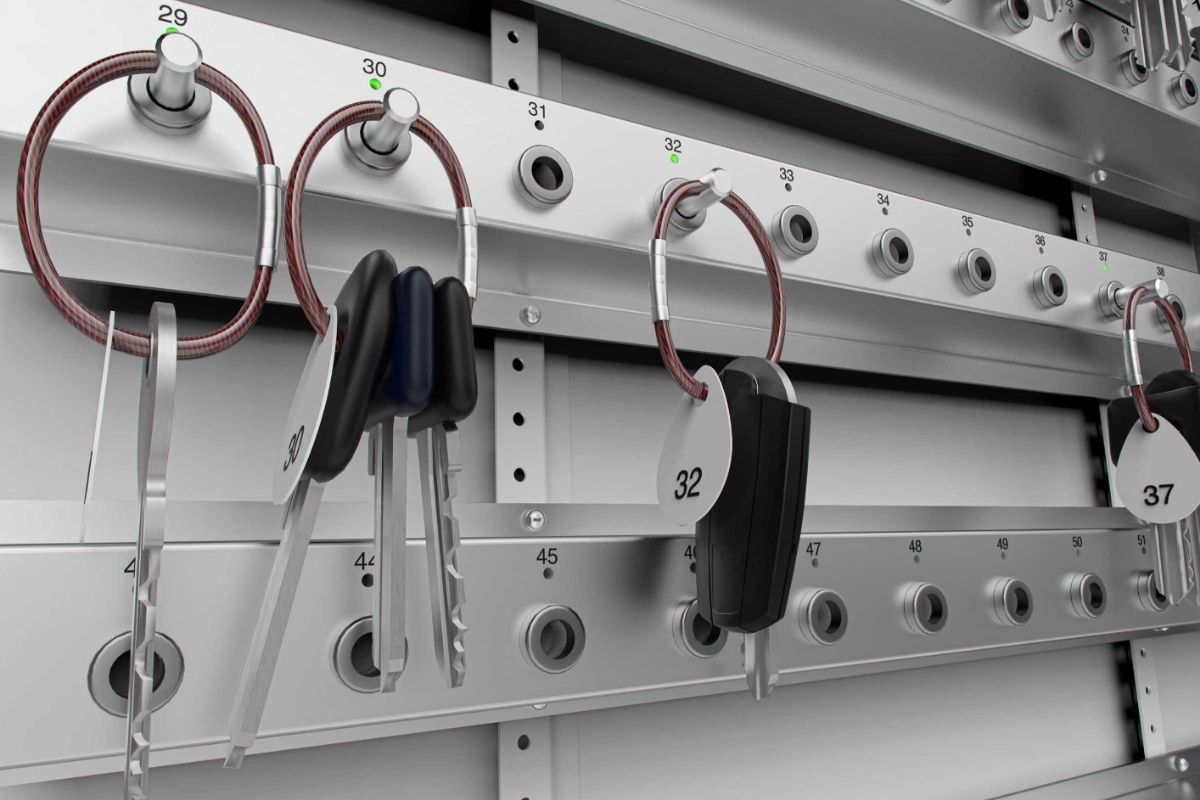
For decades, access has meant keys on keyrings.
If you’re lucky, the keys on your keyring are coloured or labelled.
If you’re unlucky, they’re all silver and they all look exactly the same.
And once you see how modern access control works, the old way starts to feel pretty outdated.
Old-fashioned key systems seem reliable on the surface.
You issue a key, someone unlocks a door, that feels like a success. End of story.
The problem is, once a building grows beyond a handful of doors, safety and security can become compromised very quickly.
It’s natural in business for staff to change roles, and it’s expected that contractors will need to come and go. As businesses expand, access levels shift and change.
And all of a sudden, the key ring becomes heavier.
Keys get copied.
Keys get lost.
Keys get handed between staff members.
Before long, nobody can confidently answer one very simple question:
Who actually has access to this building right now?
That’s where modern commercial access control systems come in.
Instead of physical keys, modern electronic access control systems use digital credentials.
Each credential is linked to a specific person, and each person is given access based on their role.
Devices like keycards or fobs are now commonplace in many buildings, particularly when members need access to shared spaces such as gyms or libraries.
Our preferred option is the device almost everyone carries with them at all times - the smartphone.
Access can be granted via smartphone, and permissions can be updated instantly.
A manager might have access to every door in the building.
A cleaner might have access between 8pm and midnight.
A contractor might have access to a single room for one afternoon.
The system handles all of it automatically.
No extra keys.
No confusion.
No guessing who has access.
Just clear, controlled access across the entire property.
Card readers can also include a built-in keypad, which means no keys, fobs or phones required. Staff or visitors simply enter a PIN. Need to grant short-term access? Create a temporary code for a few hours, then let it expire automatically. Easy access in, no lingering access afterwards.
Best of all, if you want the entire premises locked automatically from 8pm to 8am (or any time of your choosing), you simply create an automated schedule and the system makes it happen.
One of the biggest differences between traditional keys and modern access control is visibility.
With keys, you simply have to hope everything is secure.
Even if you have CCTV security cameras monitoring every entry and exit point, that doesn’t prevent bad actors from gaining access - it simply means you’ll have the footage of them doing it.
With modern access control platforms, you can actually see what’s happening from your control panel, and easily set up customised alerts to notify you - in real time - when something isn’t right.
With the touch of a button, you can see:
That level of visibility changes how buildings operate.
It removes guesswork and replaces it with real information.
And a surprising perk? It saves a significant amount of time for administrative staff who would otherwise be tasked with getting keys cut, replaced or revoked every time someone joins or leaves the team.
Keys create a surprisingly awkward problem when staff move on.
If someone leaves a company but still has a key - even when the departure is on good terms - the only truly secure option is often re-keying the entire door.
That’s expensive, inconvenient, and it rarely happens as often as it probably should.
Likewise, when someone loses a key, who’s to say whether it slipped innocently into a drainpipe or found its way into the hands of someone with bad intentions.
Situations like this can create grey areas when it comes to security responsibility and insurance coverage, particularly if access was granted through a physical key that was never returned.
Digital credentials solve that problem instantly.
When someone no longer requires access, their credential can be revoked in seconds.
No locksmith required, no replacing hardware.
Access simply disappears. Instantly
In many environments, security is about a whole lot more than just protection - it’s about accountability.
Modern commercial door security systems automatically record access activity.
That means operators can see who entered a door, what time they entered, and which credential was used.
These audit logs can be incredibly valuable during compliance reviews, internal investigations or operational planning.
Instead of relying on memory or assumptions, the system creates a clear record of activity.
And accountability doesn’t stop at access records.
Australia’s fire egress regulations also require that everyone in a building can exit safely during an emergency - a requirement that digital access control systems neatly solve.
A door can remain securely locked from the outside - ensuring nobody enters without permission - while remaining fully compliant from the inside.
With a digital access system in place, when a fire alarm is triggered, every egress door is unlocked - so during an evacuation, the door simply pushes open.
No complicated panic bars or push-to-exit buttons.
Controlled entry. Safe exit.
One of the most common challenges in commercial buildings happens at the end of the day.
Someone has to lock up - often someone in the final hour of a long shift, feeling tired, hungry and ready to head home.
The lights need to go off, tills and cash registers need to be closed off, doors need to be locked and alarm systems need to be armed.
And as that person leaves the building for the night, there are usually one of two thoughts lingering in the back of their mind.
We always hope it’s, “Did I lock everything?”
But more often, it’s, “What am I going to have for dinner?”
Understandably, after a long day, dinner tends to win that internal debate. But for building managers, that should raise an important question.
How confident are we that everything was actually secured?
Modern access control removes that uncertainty.
Central dashboards allow building managers to see the status of every door in real time.
Automated schedules can lock doors at set times.
Alerts can be triggered if a door is left open.
And staff can quickly confirm everything is secure before leaving.
Instead of hoping the building is secure, operators can actually check.
And know.
We know every door is shut, locked and secure until the morning.
Across the Gold Coast, more commercial buildings are moving toward keyless entry systems, because modern buildings demand more visibility, flexibility and control.
Electronic access control allows businesses to manage dozens of doors, hundreds of staff and multiple schedules without the complexity of physical keys.
And once building operators experience that level of clarity, it becomes very difficult to go back.